

When a company experiences sudden data loss, the impact can be immediate and severe. A crashed server hard drive can stop critical operations. A corrupted SQL database can make important records inaccessible. A failed RAID array can affect multiple business systems. A ransomware attack can also bring operations to a halt. For businesses in Dubai, finding a reliable and secure recovery partner is essential. The right provider can help reduce downtime and limit potential financial losses. At Recovery Data, we provide professional business data recovery services. Our Dubai facility handles complex corporate data loss cases. We use advanced recovery equipment and cleanroom technology. Our engineers also follow strict confidentiality procedures.
Urgent Business Data Loss? Here Is Where to Get Help in Dubai
When critical business data disappears, the impact can be immediate. This may include financial records, client databases, accounting files, customer information, and project documents. Lost emails and business files can also disrupt daily operations. Even a short period of downtime can delay projects. It can also affect customer service and business revenue.
Many businesses try to solve the problem internally. They may restart the system or reconnect the storage device. Some teams may run disk repair tools or consumer recovery software. These actions can make the situation worse. This is especially true when the device has physical damage. Failing components, bad sectors, firmware problems, and RAID failures require careful handling. Repeatedly powering on a failing hard drive can cause additional damage. Unplanned repairs can also reduce the chances of successful data recovery.
What Makes Business Data Recovery Different From Consumer Recovery?
Consumer data recovery usually involves personal files. These may include photos, videos, documents, and other files. The data often comes from one laptop, desktop, USB drive, or external hard drive. Business data recovery involves much more complex environments. Companies may use servers, databases, virtual machines, NAS devices, SAN systems, and RAID arrays.
Proprietary File Systems & Virtualization: Enterprises often use VMware and Hyper-V environments. They may also use SAN, NAS, virtual machines, databases, and custom storage systems.
Multi-Drive Dependencies: Business data often exists across several drives. RAID configurations such as RAID 0, RAID 1, RAID 5, RAID 6, and RAID 10 can distribute this data.
Database and Application Dependencies: Businesses often store information inside databases. Customer records, invoices, inventory, employee information, and transactions may depend on these databases.
Strict Uptime & Compliance Demands: Businesses cannot always tolerate long periods of downtime. Storage systems may support financial operations, customer management, production, security, and communication.
Higher Data Volumes and Greater Complexity: A consumer may need to recover a few hundred gigabytes. A business may need to recover several terabytes or even petabytes. This data may exist across multiple storage systems.
Confidentiality and Security Requirements: Business storage can contain sensitive information. This may include customer records, financial documents, contracts, employee files, intellectual property, and passwords.
Business data recovery involves more than recovering individual files. Engineers must understand the complete storage environment. They must also identify dependencies between drives and systems. The recovery process should protect the original data and reduce further risk.
Our Dubai Secure Facility vs. Remote/Software Solutions
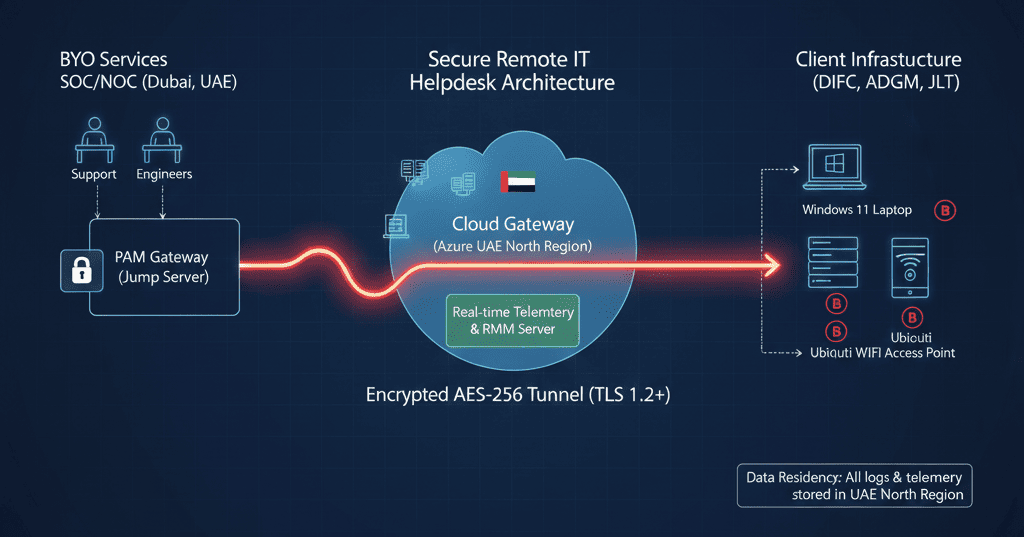
Remote or software-based recovery may not suit physically damaged storage devices. This is especially true for failing mechanical hard drives. A failing drive may have damaged read/write heads. Continued operation can cause those heads to damage the magnetic platters. This can turn a recoverable problem into severe data loss. Our Dubai laboratory uses hardware-level recovery techniques.Our engineers can work around damaged firmwarewhen possible. They can also address failing spindle motors and damaged PCB components. Some SSD failures require direct access to NAND flash memory. In such cases, our engineers may use specialized chip-level recovery tools.
Core Business & Enterprise Data Recovery Services We Offer in Dubai
We provide recovery solutions for different corporate storage environments. Our services support businesses across Dubai and the wider UAE.
Server and RAID Data Recovery (RAID 0, 1, 5, 6, 10)
Server failures can happen without warning. A RAID 5 array may lose multiple drives. A server may also suffer a controller failure or file system corruption. Our engineers can analyze failed RAID systems. They identify the original RAID parameters and drive structure. They then reconstruct the array when technically possible. We also provide Server Recovery Services and RAID Data Recovery.
Corporate Database & File Recovery
Database corruption can stop business operations. Important information may become inaccessible within seconds. We work with several database environments. These include Microsoft SQL Server, Oracle, MySQL, and Microsoft Exchange. Our engineers analyze damaged database structures. They work to recover accessible records while maintaining database consistency.
Virtual Machine & Storage Area Network (SAN) Recovery
Modern businesses often depend on virtualized infrastructure. Virtual machine failures can therefore affect several business applications. We can work with VMDK and VHDX files. Our engineers can also examine virtual machine snapshots and damaged storage environments. Recovery may be possible from failed SAN systems and direct-attached storage enclosures.
Ransomware and Malware-Corrupted Data Recovery
Ransomware attacks can encrypt critical business files. Such attacks can stop operations very quickly. We strongly discourage paying a ransom. Payment does not guarantee complete data recovery or data integrity. Our engineers can analyze affected storage systems. In some cases, they may recover unencrypted files or usable database fragments. Shadow copies and database transaction logs may also provide additional recovery opportunities when they remain intact.
Supported Storage Technologies & Devices
Enterprise Hard Disk Drives (HDDs): We support high-capacity SAS, SATA, and SCSI drives. These drives are common in enterprise servers and storage systems.
Solid-State Drives (SSDs): We handle enterprise NVMe and SATA SSDs. Common problems include controller failure, firmware corruption, and NAND-related issues.
Network-Attached Storage (NAS) & Direct-Attached Storage (DAS): We support multi-bay storage systems from brands such as Synology, QNAP, and Western Digital.
Enterprise Tape Backups: We also handle legacy LTO and DAT tapes. Physical degradation and tape tension problems can make these media difficult to access.
Why Dubai Businesses Trust Recovery Data
Choosing a data recovery partner requires careful evaluation. Technical expertise is important. Facility security and transparent processes also matter.
ISO-Certified Cleanroom Environment: Mechanical hard drives may require internal repairs. Our engineers perform this work in a controlled cleanroom environment. This helps protect sensitive drive components from contamination.
Strict Confidentiality & NDAs: Corporate storage can contain highly sensitive information. We protect client data through controlled access and secure handling procedures. We can also arrange non-disclosure agreements for business clients.
Transparent Diagnostic Process: Our engineers first examine the affected storage media. They identify the likely cause of failure and assess the recovery options. We then provide clear information about the recovery process and expected costs.
No Data, No Fee Policy: We do not charge a recovery service fee when our engineers determine that the required business data cannot be recovered.
Our Step-by-Step Corporate Recovery Process
1. Secure Device Drop-Off or Free Courier Pickup
You can bring your hardware to our Dubai facility. We can also arrange a secure business courier pickup. Our team can collect the storage device from your office.
2. Diagnostic Evaluation
Our engineers perform a non-destructive assessment. They examine the hardware and logical structure of the device. The assessment helps identify the root cause of the failure. It also helps determine whether recovery remains technically possible.
3. Cleanroom Recovery & Verification
Physical damage may require cleanroom intervention. Our engineers perform internal repairs in a controlled environment. Once the drive becomes stable, we create a sector-by-sector clone. This approach reduces unnecessary stress on the original media.
4. Secure Data Return
Our engineers verify the recovered data before delivery. We can return the files on a new encrypted external drive. Secure cloud transfer may also be available when appropriate.
Serving Businesses Across Dubai and the UAE
We support businesses throughout Dubai and the UAE. Our clients include companies in DIFC, Downtown Dubai, and Business Bay. We also support businesses in Dubai Silicon Oasis and Jebel Ali. Our services extend across the UAE. We assist businesses in Abu Dhabi, Sharjah, Ajman, Umm Al Quwain, Ras Al Khaimah, and Fujairah.
What should I do immediately if my company server or NAS crashes?
Stop using the affected system immediately. Do not repeatedly restart the server or NAS. Avoid running repair tools before a professional assessment. Continued operation can place additional stress on failing hardware. Automatic RAID rebuilds can also create risks. These processes may overwrite information that engineers need for recovery. For example, two failed drives can make a RAID 5 system extremely difficult to access.
Starting an unnecessary rebuild can put additional stress on the remaining drives. Do not initialize an unknown volume. Do not format the storage device. Avoid changing the RAID configuration. Do not run CHKDSK or defragmentation tools. You should also avoid installing third-party recovery software. Preserve the original configuration as much as possible. Contact Recovery Data for professional guidance. Our engineers can assess the system and explain the available recovery options.
How much does business data recovery cost in Dubai?
Business data recovery costs vary from case to case. The storage device can affect the price. The cause of failure also matters. The amount of data can influence the recovery process. RAID reconstruction and physical repairs may require additional work. A logical recovery from a healthy external drive can be relatively simple. A damaged HDD may require advanced laboratory procedures.
RAID 5 and RAID 6 recovery can require specialized imaging. Engineers may also need to reconstruct the original RAID structure. Mechanical failures can increase the complexity. These failures include damaged read/write heads, spindle motor problems, firmware issues, and severe bad sectors. For this reason, we recommend a professional diagnostic assessment. The assessment allows engineers to understand the problem before providing a recovery cost.
How long does corporate data recovery take?
Recovery time depends on several factors. These include the type of failure and the condition of the storage media. The amount of data can also affect the recovery time. Complex RAID systems may require additional analysis and imaging. A simple logical recovery may take less time. Physical hard drive damage usually requires more advanced procedures. Database corruption, SSD failure, NAS problems, and RAID failures can also increase recovery time.
A standard diagnostic assessment may take around 24 to 48 hours. Urgent business cases may qualify for expedited recovery. Recovery speed should never compromise data safety. Rushing a failing drive can cause additional damage.
Is my company data secure during the process?
Business storage can contain highly confidential information. This may include financial records, customer databases, employee information, contracts, emails, and intellectual property. For this reason, data recovery requires secure handling procedures. Our engineers work in controlled environments and restrict access to authorized personnel.
For example, a law firm may store confidential client documents on a failed server. An accounting company may store financial records on the same system. Recovery Data follows controlled data-handling procedures during business recovery cases. We can also arrange non-disclosure agreements for corporate clients when required.
Can you recover data from a failed RAID or NAS system?
RAID and NAS recovery can remain possible after a storage failure. The chances depend on the condition of the individual drives and the original configuration. RAID systems distribute data across multiple drives. They may use striping, mirroring, or parity. The complete data structure can therefore depend on several drives.
For example, a RAID 5 system can continue working after one drive fails. A second drive failure can make the array inaccessible. Our engineers first identify the original RAID structure. They examine the RAID level, disk order, stripe size, and parity configuration. They also check the condition of each drive. Engineers can then plan the safest reconstruction method. Do not randomly swap RAID drives. Do not change RAID settings. Avoid initializing the volume or starting an automatic rebuild. These actions can overwrite important information. They can also make the recovery process more difficult.
Can you recover data from a business SSD or NVMe drive that is no longer detected?
SSD and NVMe recovery can sometimes succeed even when the drive is not detected. The exact recovery method depends on the underlying failure. The problem may involve the controller, firmware, NAND storage, or power circuitry. File system damage can also prevent the drive from appearing normally. For example, an NVMe SSD may suddenly disappear from the BIOS.
The drive may still contain important company documents and databases. Do not repeatedly update the firmware. Avoid formatting or initializing the drive. A professional diagnostic can identify the type of failure. Engineers can then select the most appropriate recovery method.
Can business data be recovered after accidental deletion or formatting?
Accidentally deleted or formatted data may remain recoverable. The chances are usually better when the device has not been used after the data loss. Deleted files may remain on the storage media until new data overwrites them. Continued use can therefore reduce the chances of recovery. For example, an employee may accidentally format an external drive containing project files. Disconnecting the drive immediately can help protect the remaining data. Do not install new software on the affected drive. Avoid downloading files or copying new documents to it. Stop using the device and seek professional recovery assistance as soon as possible.
What happens during the initial business data recovery assessment?
Our engineers begin by examining the affected storage device. They look for signs of hardware or software failure. The assessment may identify mechanical damage, electronic faults, firmware problems, or bad sectors. Engineers also check for file system and partition problems. For example, a NAS may become inaccessible after several drives report errors. Connecting the drives to another computer may not restore access.
The data may depend on the original RAID configuration. Engineers may therefore need to identify the RAID level and drive order. They may also examine stripe size, parity information, and individual drive health. This information helps them create a safer recovery strategy.
Should I take a failed business hard drive to a normal computer repair shop?
A normal computer repair shop can handle many hardware problems. Complex data recovery often requires specialized equipment and expertise. This is especially important when the drive contains the only copy of critical business information. For example, a clicking hard drive may have mechanical damage.
Repeatedly powering it on can increase that damage. A RAID server also requires specialized handling. The data may depend on the relationship between several drives.A professional data recovery laboratory can examine these problems more safely. Engineers can then recommend the most suitable recovery approach.
Contact Us
If your organization has lost critical business data, contact our recovery specialists. We can assess failed hard drives, servers, RAID arrays, NAS devices, and SSDs.
We also handle accidental deletion, formatting, database corruption, and other business data loss situations.
Email: info@recoverydata.ae
Phone: +971 56 410 1040
Location: Dubai, UAE
Contact Recovery Data today. Our team can discuss your data loss situation and arrange a professional recovery assessment.