
Ransomware Data Recovery near Al Barsha 3
A sudden ransomware attack can bring critical business operations to a complete standstill within minutes. When ransomware encrypts enterprise databases, virtual machines, shared network folders, workstations, servers, or local storage arrays, organizations can lose access to essential operational data and face significant downtime. Attempting repeated decryption, rebuilding systems, or modifying affected drives without a controlled […]
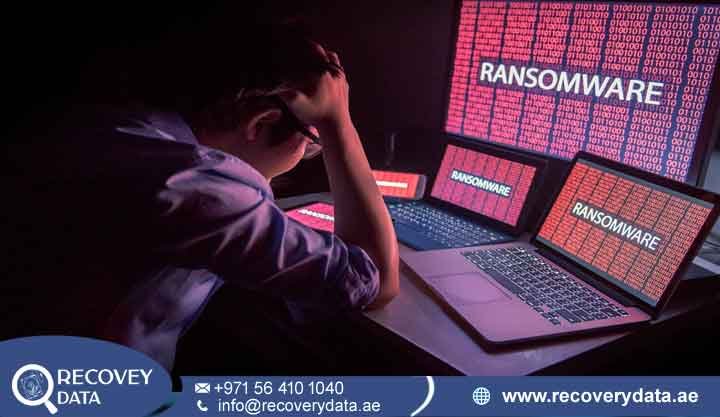
A sudden ransomware attack can bring critical business operations to a complete standstill within minutes. When ransomware encrypts enterprise databases, virtual machines, shared network folders, workstations, servers, or local storage arrays, organizations can lose access to essential operational data and face significant downtime. Attempting repeated decryption, rebuilding systems, or modifying affected drives without a controlled recovery strategy can increase the risk of permanent data loss. Businesses therefore need immediate, structured technical intervention that focuses on preserving the affected storage media, containing further damage, and determining which recovery options remain available.
Recovery Data provides specialized ransomware data recovery near Al Barsha 3, supporting businesses, commercial facilities, and institutions across Dubai and the wider UAE. Our technical approach combines emergency incident containment, controlled storage imaging, forensic analysis, advanced cryptanalysis where applicable, and deep file-carving techniques to address complex ransomware-related data loss. Engineers first assess the affected systems and identify the ransomware behavior, storage configuration, encryption impact, and condition of the underlying media before selecting an appropriate recovery strategy. Where standard decryption cannot restore access, specialists can examine file structures, recover accessible data from affected storage, and reconstruct damaged or partially encrypted files when technically feasible.
Emergency Action Plan: What to Do Immediately After a Ransomware Attack
When ransomware executes across a workstation, server, or Network Attached Storage (NAS) unit, the initial actions taken by your IT team directly influence whether your data can be restored.
Isolate Your Infrastructure to Stop Network Propagation
Modern ransomware strains, such as LockBit, BlackCat/ALPHV, or Akira, use automated lateral movement tools to spread across local networks via compromised Remote Desktop Protocol (RDP) sessions, active directory privileges, or unpatched vulnerabilities.
Disconnect Network Cables Immediately: Unplug Ethernet connections and disable Wi-Fi interfaces on all infected endpoints and servers.
Isolate NAS and SAN Storage: Unmount active network shares (SMB/NFS) to prevent encryption processes running on workstations from reaching centralized backup repositories.
Do Not Abruptly Power Off Systems: If virtual machines or servers are running, abrupt power termination can corrupt raw database headers and clear volatile RAM where temporary decryption keys or residual file structures might exist. Isolate the network segment while keeping the hardware powered on until a specialist provides guidance.
Crucial Steps to Avoid Permanent Data Destruction
Running unverified utility scanners or public decryption tools downloaded from online forums can severely degrade file integrity. Ransomware frequently leaves target files in a partially modified state. Running automated disk utilities across encrypted drives can alter sectors, permanently destroying raw file signatures and metadata headers required for forensic extraction.
Do not delete ransom notes or rename modified file extensions. These files contain essential parameters, unique victim IDs, and key structures required during cryptanalysis.
How Professional Ransomware Data Recovery Works in Al Barsha 3

Recovering encrypted or corrupted data requires a multi-layered forensic process rather than relying solely on standard decryption keys. Recovery Data utilizes dedicated hardware tools and custom software scripts to analyze and rebuild compromised volumes.
Step 1: Emergency Media Diagnostics and Cryptanalysis
Upon receiving media at our Dubai laboratory-or via courier pickup from your premises in Al Barsha 3, Barsha Heights, or Dubai Internet City-our engineers create sector-by-sector disk images using write-blocked forensic hardware.
All diagnostic operations take place on these bit-stream clones to keep original storage drives intact. During cryptanalysis, engineers analyze:
The Cipher Implementation: Identifying whether symmetric (AES-256, ChaCha20) or asymmetric (RSA-2048/4096) encryption was used, and determining whether keys were generated locally or retrieved from remote Command and Control (C2) servers.
Header and File Structure Damage: Evaluating whether the malware modified full file structures, encrypted only the header/footer bytes (intermittent encryption), or truncated raw data streams.
Step 2: Volatile Data and Shadow Copy Extraction
Ransomware routines often attempt to clear system restore points and delete Volume Shadow Copies (VSS) using commands like However, depending on system permissions, execution speed, or storage controller configurations, these commands may fail or perform incomplete deletions.
Using proprietary block-level deep carving techniques, our recovery specialists scan unallocated space across drive sectors to reconstruct deleted temporary versions of files created prior to the encryption pass. This process frequently yields intact versions of critical spreadsheets, documents, and historical database backups.
Step 3: Decryption Key Recovery and Database Reconstruction
When algorithmic flaws are discovered within specific ransomware variants, key extraction becomes viable. Where complete decryption is mathematically restricted due to strong asymmetric encryption, focus shifts to rebuilding structured application data:
SQL / Oracle Database Repair: Parsing raw files to extract clean data tables, stored procedures, and transaction logs, even if secondary indexes are corrupted.
Virtual Machine Restoration: Reconstructing hypervisor containers by rebuilding underlying storage descriptors and block allocation tables.
Specialized Storage and Server Ransomware Recovery Services
Commercial operations in Al Barsha 3 rely heavily on multi-drive arrays and centralized network storage. Recovering from a cyberattack across complex hardware requires technical familiarity with storage controller architectures and logical volume management.
Enterprise NAS and SAN Ransomware Recovery
Network Attached Storage units running operating systems such as Synology DSM or QNAP QTS are frequent targets for specialized malware strains including Qlocker, DeadBolt, and eChraida. These attacks often manipulate embedded Linux file systems (Ext4 or Btrfs) and apply 7z or custom encryption locks to shared directories.
Our technical workflow involves mounting physical drives in read-only environments, reconstructing Linux volume groups (LVM), and repairing altered snapshot metadata to restore lost shared drives without risking volume degradation.
RAID Array Data Reconstruction (RAID 5, RAID 6, RAID 10)
When ransomware strikes a server connected to a hardware RAID controller such as Dell PERC, HPE Smart Array, or Lenovo ThinkSystem, the recovery process becomes significantly more complex. If encryption coincides with a disk degradation event, controller malfunction, or RAID configuration failure, standard operating system tools may no longer recognize or access the underlying volume correctly.
Attempting to rebuild the array through the original server environment can also alter RAID metadata or place additional stress on unstable drives. Professional recovery therefore requires engineers to preserve the available storage data and reconstruct the array in a controlled environment before attempting logical recovery.
Encrypted Hard Drive and Hardware Failure Recovery
A major challenge during ransomware incidents occurs when storage devices suffer physical or electrical failures during the attack. Ransomware processes generate high read/write activity across connected media, placing heavy wear on drive mechanics. This intense utilization can trigger head crashes, magnetic media degradation, or Printed Circuit Board (PCB) component burnouts on aging enterprise hard drives.
If a drive begins making clicking noises, grinding sounds, or disappears from the BIOS during an attack, it has entered physical failure. Attempting software recovery on a physically failing drive can ruin the magnetic platters, making data permanently unrecoverable. If your storage hardware has suffered electrical damage, component failures, or PCB burnouts during an operational crisis, read our detailed guide on Hard Drive PCB Failure Data Recovery in Dubai.
Ransomware Recovery Timelines and Cost Factors in Dubai
Understanding the variables that influence turnaround time and financial investment helps IT directors plan emergency responses effectively.
How Long Does Ransomware Recovery Take in Al Barsha?
Recovery timelines vary according to the storage environment, level of damage, and complexity of the required work. Emergency diagnostics typically take 4 to 12 hours and cover initial containment, bit-stream imaging, cryptanalysis, file-structure corruption analysis, and recovery feasibility assessment.
Standard enterprise recovery generally takes 2 to 5 business days and may include deep file carving, shadow-copy extraction, virtual machine file-structure repairs, and complete extraction for standard storage capacities of up to 10TB. Complex RAID and enterprise storage cases typically require 5 to 10 or more business days, particularly when engineers work with high-capacity multi-drive arrays exceeding 20TB, reconstruct complex database tables, or address combined physical and logical drive failures that require cleanroom intervention.
Technical Comparison: Recovery Pathways
When organizations face operational downtime, they often evaluate several recovery options before choosing an appropriate approach. Professional laboratory recovery provides a controlled and non-destructive process by working from carefully created clones of the affected storage media, which helps reduce the risk of further data corruption. In contrast, automated in-house decryptors can increase the risk of irreversible file corruption or overwritten data when the underlying storage has already suffered damage.
Professional recovery facilities can also handle complex environments involving nested RAID arrays, SAN systems, databases, and virtual disks, while standard in-house tools may struggle with broken file handles, striped volumes, corrupted databases, or complex storage configurations. When hardware failure contributes to data loss, professional laboratories can use cleanroom procedures, specialized mechanical techniques, and PCB-level micro-soldering to address damaged drives. Automated software-based recovery tools cannot repair mechanical failures, electrical faults, controller problems, or complete drive crashes.
Local Al Barsha and Neighboring District Support
We provide rapid hardware pickup and emergency technician dispatch across major business and technology hubs surrounding Al Barsha 3 and throughout Dubai. Our local response covers Al Barsha 1, Al Barsha 2, and Al Barsha 3, supporting businesses, commercial offices, and private facilities that require urgent assistance with compromised storage devices. We also serve Barsha Heights (TECOM) and Dubai Internet City, where technology companies and corporate networks often depend on critical servers, workstations, and enterprise storage systems.
Our coverage extends to Dubai Media City, Knowledge Village, and the Al Quoz industrial areas, supporting media organizations, broadcast operations, industrial businesses, and enterprise environments with server arrays and high-capacity storage. Rapid pickup and technician dispatch help organizations secure affected hardware quickly and move it into a controlled recovery process, reducing unnecessary handling and helping preserve the condition of the original storage media.
Broader UAE Enterprise Coverage
For enterprise organizations located beyond Dubai, including Abu Dhabi, Sharjah, Ajman, Ras Al Khaimah, Fujairah, and Umm Al Quwain, Recovery Data provides secure courier transport to safely ship storage media directly to our central Dubai laboratory.
Why Businesses Trust Recovery Data
Selecting a professional data recovery facility requires careful evaluation of its technical expertise, physical security infrastructure, and commitment to data privacy. ISO-compliant security protocols help protect commercial records, financial systems, and private client databases, while strict non-disclosure agreements (NDAs) support compliance with applicable UAE data protection requirements.
Advanced laboratory equipment, including cleanroom facilities, hardware write-blockers, proprietary PC-3000 diagnostic systems, and specialized cryptanalysis tools, enables engineers to perform controlled recovery operations on unstable storage media. Transparent communication also plays an important role, with clients receiving detailed diagnostic evaluations and realistic recovery expectations before approving full extraction procedures. For comprehensive information about our storage, server, and hard drive recovery solutions, visit our central Data Recovery Services in Dubai page.
Frequently Asked Questions
Can ransomware encrypted files be recovered without paying a ransom?
Yes, in many instances. Professional recovery relies on deep block-level carving to retrieve unallocated file fragments, extracting residual Volume Shadow Copies (VSS), rebuilding corrupted database schemas, or applying algorithmic cryptanalysis for known ransomware strains. Working on write-blocked clones ensures your underlying data remains preserved throughout testing.
Can deleted ransomware-affected files be recovered?
Yes. Many ransomware strains copy original files, create an encrypted duplicate, and then issue a delete command for the originals. If disk sectors have not been fully overwritten by new system activity, raw file carving routines can identify missing headers and reconstruct the unencrypted original files directly from raw drive space.
How do I identify ransomware-damaged files and storage?
Common indicators of a ransomware attack can include several noticeable changes to files and system behavior. Documents may suddenly receive unfamiliar file extensions such, while their usual application icons may change to generic or unreadable symbols. Users may also find new text or HTML files in multiple folders containing, or similar ransom instructions. In business environments, shared network folders may become inaccessible or experience sudden performance issues as ransomware activity affects connected systems and generates unusually high network traffic.
Do you offer physical media pickup near Al Barsha 3?
Yes. Recovery Data provides prompt media collection services for corporate offices and commercial facilities in Al Barsha 3, Barsha Heights, Al Barsha 1, Al Barsha 2, and surrounding business districts in Dubai. Storage hardware is transported under secure chain-of-custody procedures directly to our laboratory.
How long does an initial data recovery evaluation take?
Emergency evaluations are generally completed within 4 to 12 hours after receiving media at our lab. During this assessment, our engineers construct a bit-stream clone, evaluate file system integrity, identify the encryption variant, and provide a technical recovery report outlining available options.
Contact Recovery Data for Professional Assistance
If your organization in Al Barsha 3 or the wider Dubai area is experiencing a critical data loss emergency due to a ransomware attack, contact our technical team immediately for professional guidance and secure device evaluation. Phone: +971 56 410 1040 Email: info@recoverydata.ae Website: recoverydata.ae Location: Dubai, United Arab Emirates

