
In the heart of Dubai’s commercial and financial center, time is a critical business resource. Whether you manage a growing fintech company near the Burj Khalifa, operate a legal consultancy in Business Bay, or run a creative agency close to Sheikh Zayed Road, unexpected data loss can interrupt daily operations within minutes. A failed server, inaccessible database, corrupted workstation, or damaged SSD can prevent employees from accessing the information they need to continue working. For many businesses, important data exists across multiple storage environments. Client records, accounting files, project documents, databases, emails, virtual machines, design files, and internal applications may depend on servers, RAID arrays, NAS devices, laptops, and external storage. When one of these systems fails, waiting several days for an initial assessment may not be practical.
At Recovery Data, we provide expedited Same Day Data Recovery Downtown Dubai services for businesses, professionals, and residents who need urgent assistance. Our recovery workflow combines priority diagnostics, specialized recovery equipment, controlled laboratory procedures, and secure data handling. Depending on the condition of the storage device, we can assess logical failures, firmware problems, electronic faults, mechanical HDD damage, SSD failures, and complex multi-drive storage systems. Our service supports clients throughout Downtown Dubai and nearby business districts. We understand that urgent recovery requires more than simply running consumer recovery software. Each case requires an assessment of the storage technology, failure symptoms, and condition of the underlying media before engineers select the appropriate recovery method.
High-Priority Emergency Data Recovery in Downtown Dubai
Downtown Dubai operates at a fast pace, with corporate offices, financial companies, hospitality businesses, professional services, retail operations, and entrepreneurial ventures relying on digital systems every day. Many organizations depend on continuous access to business data. A sudden storage failure can therefore affect more than one computer or employee. Modern businesses may use network-attached storage, enterprise servers, RAID arrays, high-speed NVMe SSDs, encrypted laptops, workstations, and external backup devices. Each storage technology has its own architecture and failure patterns. A damaged HDD requires a different approach from a failed NVMe SSD, while a degraded RAID array requires careful reconstruction of the original storage parameters.
When hardware fails, the cause may range from accidental deletion and file-system corruption to power-related damage, firmware problems, controller failure, or mechanical deterioration. Physical impact, liquid exposure, electrical faults, unexpected shutdowns, and component wear can all contribute to data-access problems. Our same-day emergency service is designed to provide a fast first response. We begin by assessing the affected device and identifying the likely failure category. This allows us to determine whether the case may benefit from logical recovery, firmware analysis, electronic repair, controlled mechanical work, or another specialized procedure.
Storage Devices We Recover on a Same-Day Basis
Enterprise Servers and RAID Arrays: We assist with business servers and multi-drive storage systems using configurations such as RAID 0, RAID 1, RAID 5, RAID 6, and RAID 10. These systems may contain databases, accounting records, virtual machines, applications, project files, and other business-critical information. RAID recovery requires careful analysis of the original disk order, stripe structure, parity configuration, file system, and condition of each member drive.
Mechanical Hard Disk Drives (HDDs): We handle internal and external HDDs used in desktop computers, laptops, servers, NAS systems, and external enclosures. Common symptoms include clicking, unusual buzzing, failure to spin, repeated restarts, unstable detection, incorrect capacity, and read errors. Physical recovery methods depend on the specific mechanical or electronic failure.
Solid State Drives (SSDs): We work with SATA SSDs and M.2 SSDs using SATA or NVMe interfaces. An SSD may become inaccessible because of controller problems, firmware faults, NAND issues, power-related damage, or logical corruption. Recovery options depend on the drive architecture and the condition of the controller and flash memory.
Apple MacBooks and Professional Laptops: We assist with laptops affected by storage failure, liquid exposure, power faults, corrupted partitions, operating system problems, and other hardware issues. Where the storage media remains accessible, logical recovery may be possible. More serious hardware problems require specialized assessment.
Common Scenarios Demanding Urgent Downtown Dubai Data Recovery
Data loss can occur in many different ways. Some cases involve missing files or corrupted file systems, while others involve serious hardware damage. Understanding the type of failure is important because an incorrect repair attempt can make an already unstable device more difficult to recover.
1. Enterprise Server and Multi-Drive RAID Failures
For a business in Downtown Dubai, a failed server or degraded RAID array can quickly become an operational problem. RAID systems combine multiple drives to provide different combinations of capacity, performance, or redundancy. However, RAID does not eliminate the possibility of data loss. Multiple drive failures, controller problems, failed rebuilds, accidental configuration changes, or file-system corruption can make a RAID volume inaccessible. The recovery process must preserve the original structure and avoid unnecessary changes to the member drives.
Our specialists can examine the available drives and determine the original RAID parameters where sufficient information remains available. Depending on the case, engineers may create sector-level images of individual drives and perform a virtual RAID reconstruction using those working copies. This approach allows the recovery team to analyze the array without repeatedly modifying the original media. The recovery process may then involve reconstructing the logical volume, identifying file-system structures, and extracting accessible files. Businesses should avoid immediately initializing or rebuilding a damaged RAID system simply because management software recommends it. A rebuild changes data across the array and can complicate recovery when the underlying failure has not been properly diagnosed.
2. Mechanical Hard Drive Degradation and Head Problems
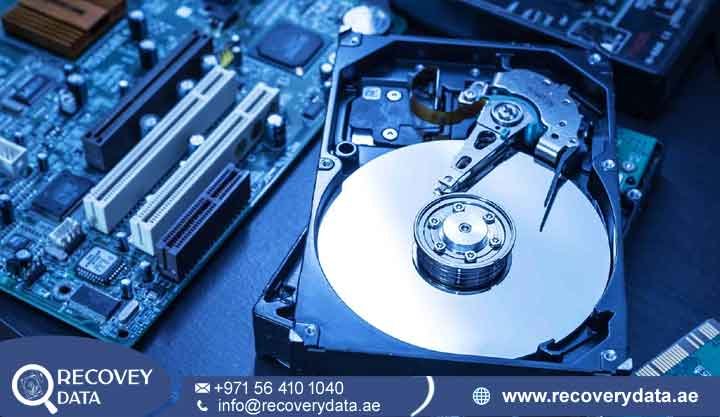
Mechanical hard drives contain spinning magnetic platters and precision read/write heads. These components operate with very small mechanical tolerances. Physical impact, vibration, wear, electronic faults, or other mechanical problems can affect normal operation. A damaged HDD may produce rhythmic clicking, repeated spin-up and spin-down behavior, unusual buzzing, grinding sounds, or intermittent detection. These symptoms can have several possible causes, so they should not be treated as proof of one specific component failure. If your hard drive suddenly begins making unusual sounds, shut it down and avoid repeated restart attempts. Continued operation can place additional stress on an unstable drive and may reduce the amount of data that remains readable.
When internal HDD work is required, engineers use a controlled cleanroom environment appropriate for the recovery procedure. Depending on the diagnosis, the process may involve head-stack work, donor components, spindle-related intervention, PCB repair, firmware analysis, or another specialized technique. The objective is to stabilize the drive sufficiently to obtain a controlled image of the accessible data. Recovery results depend on the condition of the heads, platters, firmware, electronics, and other components.
3. SSD Controller Lockouts and Flash Memory Failures
SSDs do not use moving mechanical components, but their internal architecture is highly complex. A modern SSD depends on a controller, firmware, NAND flash memory, mapping information, error correction, wear-leveling processes, and power-management circuitry. When one of these components develops a fault, the SSD may stop appearing in the BIOS or operating system. It may report an incorrect capacity, become read-only, freeze during access, or repeatedly disconnect.
Standard file recovery software can be useful when an SSD remains accessible and the problem is logical. However, software alone cannot resolve every controller or firmware failure. In cases involving hardware-level problems, specialists may use professional diagnostic platforms and controlled techniques suited to the particular SSD architecture. NAND-level recovery may also be considered in certain cases, but it is not a universal solution. Raw NAND data can involve controller-specific mapping, error correction, wear-leveling, scrambling, and encryption. Engineers must therefore understand the drive architecture before selecting this type of intervention.
Our Streamlined Same-Day Recovery Process
When time is critical, recovery must balance speed with careful engineering. Moving too quickly without understanding the failure can increase the risk of additional damage or unnecessary changes to the original storage media.
Our recovery framework focuses on priority intake, accurate diagnosis, controlled extraction, data verification, and secure delivery.
Step 1: Priority Intake and Secure Courier Coordination
For corporate offices and residential clients throughout Downtown Dubai, we coordinate priority device intake. Clients can arrange a drop-off at our Dubai facility or discuss secure collection options with our team. When the device arrives, we document its condition and record the symptoms reported by the client. Information about what happened before the failure can help our engineers understand the situation. For example, a sudden power outage, liquid spill, accidental drop, unusual clicking sound, or failed system update may provide important diagnostic context. Each case is handled as an individual recovery project. We do not assume that two devices showing similar symptoms have the same underlying problem.
Step 2: Accelerated Triage and Transparent Evaluation
Our engineers begin with controlled diagnostic checks appropriate to the device. The purpose is to identify whether the issue appears to involve the file system, electronics, firmware, controller, mechanical components, or another part of the storage system. We avoid unnecessary write operations on unstable media. When possible, engineers determine whether a safe imaging process can begin before deeper recovery work takes place. After the initial evaluation, we explain the suspected problem, proposed recovery approach, estimated timeline, and applicable cost. Major recovery work proceeds only after the client understands and approves the proposed plan..
Step 3: Advanced Laboratory Execution and Controlled Recovery
The recovery method depends on the diagnosis For mechanical HDD failures, physical intervention may require a suitable cleanroom environment. Engineers may work with the head assembly, spindle system, PCB, firmware, or compatible donor components depending on the drive’s condition. For SSDs and flash storage, engineers may investigate controller behavior, firmware, power circuitry, NAND accessibility, and other architecture-specific factors. Component-level repair or NAND-level techniques may be considered where appropriate. The recovery team aims to create a stable source for further extraction rather than repeatedly working directly on an unstable original drive. Controlled imaging can help reduce unnecessary stress on the original media.
Step 4: Logical Reconstruction and Data Integrity Verification
After engineers obtain a usable image or stable source, the logical recovery stage begins. This may involve reconstructing partitions, rebuilding directory structures, interpreting damaged file-system records, or locating individual files through controlled recovery techniques. For business cases, engineers may prioritize critical databases, accounting documents, project files, virtual machine data, or other files identified by the client. Recovered files are checked according to their type and importance. Documents, photographs, videos, databases, archives, and application files can require different verification methods. Severe media damage can affect file completeness, so the final recovery result depends on what portions of the underlying data remain readable.
Step 5: Secure File Handover
Once the recovery process is complete, the recovered information is transferred to a healthy storage device suitable for the volume of data involved. Clients can review the recovered files and confirm the required information. We follow controlled data-handling procedures throughout the recovery process. Access to client information is limited to what is required for diagnosis and recovery, helping protect sensitive business documents, personal files, financial information, and confidential project data.
Serving Downtown Dubai Businesses and Enterprise Clients
Downtown Dubai includes businesses from a wide range of professional sectors. Legal companies, financial services firms, architectural studios, technology companies, hospitality businesses, creative agencies, consultants, and other organizations can all depend on digital storage for daily operations. For these businesses, data recovery involves more than retrieving individual photographs or documents. A failed storage system may contain customer databases, accounting records, contracts, project files, application data, email archives, virtual machines, or proprietary information. We understand the importance of controlled handling in these situations. Recovery work is performed with a focus on limiting unnecessary access to client data and maintaining secure procedures throughout the process.
Our service also extends beyond Downtown Dubai. We assist clients in nearby areas such as Business Bay, DIFC, Dubai Marina, Jumeirah Lake Towers, Al Barsha, and other Dubai communities. We can also discuss recovery arrangements for clients and organizations located in Abu Dhabi, Sharjah, Ajman, Umm Al Quwain, Ras Al Khaimah, and Fujairah. Whether the affected device belongs to a single professional or an organization with multiple storage systems, our team evaluates the specific failure before recommending a recovery approach.
Frequently Asked Questions
Where can I access same-day data recovery in Downtown Dubai?
Recovery Data provides emergency data recovery support for residents, professionals, and businesses in Downtown Dubai. You can contact our team to arrange a priority assessment, drop-off, or collection options where available. We assess the affected storage device before recommending the appropriate recovery method.
Can corporate RAID servers be recovered on the same day?
Initial assessment and RAID configuration analysis can often begin on the same day. However, completing a multi-drive recovery may require additional time. The overall duration depends on the number of drives, RAID level, drive condition, file-system structure, amount of readable data, and whether physical intervention is necessary.
How much does emergency data recovery cost in Dubai?
The cost depends on the type of storage device and the nature of the failure. A deleted partition usually requires a different recovery process from a mechanically damaged HDD, failed SSD controller, or degraded enterprise RAID system. We assess the storage media first and explain the applicable recovery cost before proceeding with the main recovery work. This allows clients to understand the expected charges before authorizing the recovery process.
What should I do immediately if my business hard drive or SSD crashes?
Power down the affected workstation, server, or external drive when continued operation could place the device at risk. Avoid formatting, initializing, or rebuilding the storage system before professional assessment. For physically unstable HDDs, avoid repeated restart attempts. For RAID systems, avoid unnecessary rebuild operations. For SSDs, avoid repeated scanning or write operations when the device is unstable or disappearing from the system. Keep the device safely stored and contact a professional recovery service for assessment.
Is my data kept confidential during the recovery process?
Recovery Data follows controlled data-handling procedures designed to protect client information during the recovery process. Personal files, corporate documents, databases, financial records, and other sensitive information are accessed only as required for diagnosis and recovery. Businesses with specific confidentiality requirements can also discuss appropriate privacy arrangements or NDA requirements with our team before recovery work begins.
Secure Your Business Continuity Today
Unexpected storage failure can affect business operations, client deliverables, project deadlines, and access to critical company information. Taking the right action early can help reduce unnecessary risks and give engineers a better opportunity to assess the affected media safely. If your business or personal storage device has suddenly become inaccessible, avoid unnecessary repair attempts and arrange a professional evaluation. A proper diagnosis can determine whether the problem involves logical corruption, firmware, electronics, mechanical components, an SSD controller, or another storage-related issue.
If you need same day data recovery Downtown Dubai, contact Recovery Data for priority assistance and a professional data recovery assessment.
Email: info@recoverydata.ae
Phone: +971 56 410 1040